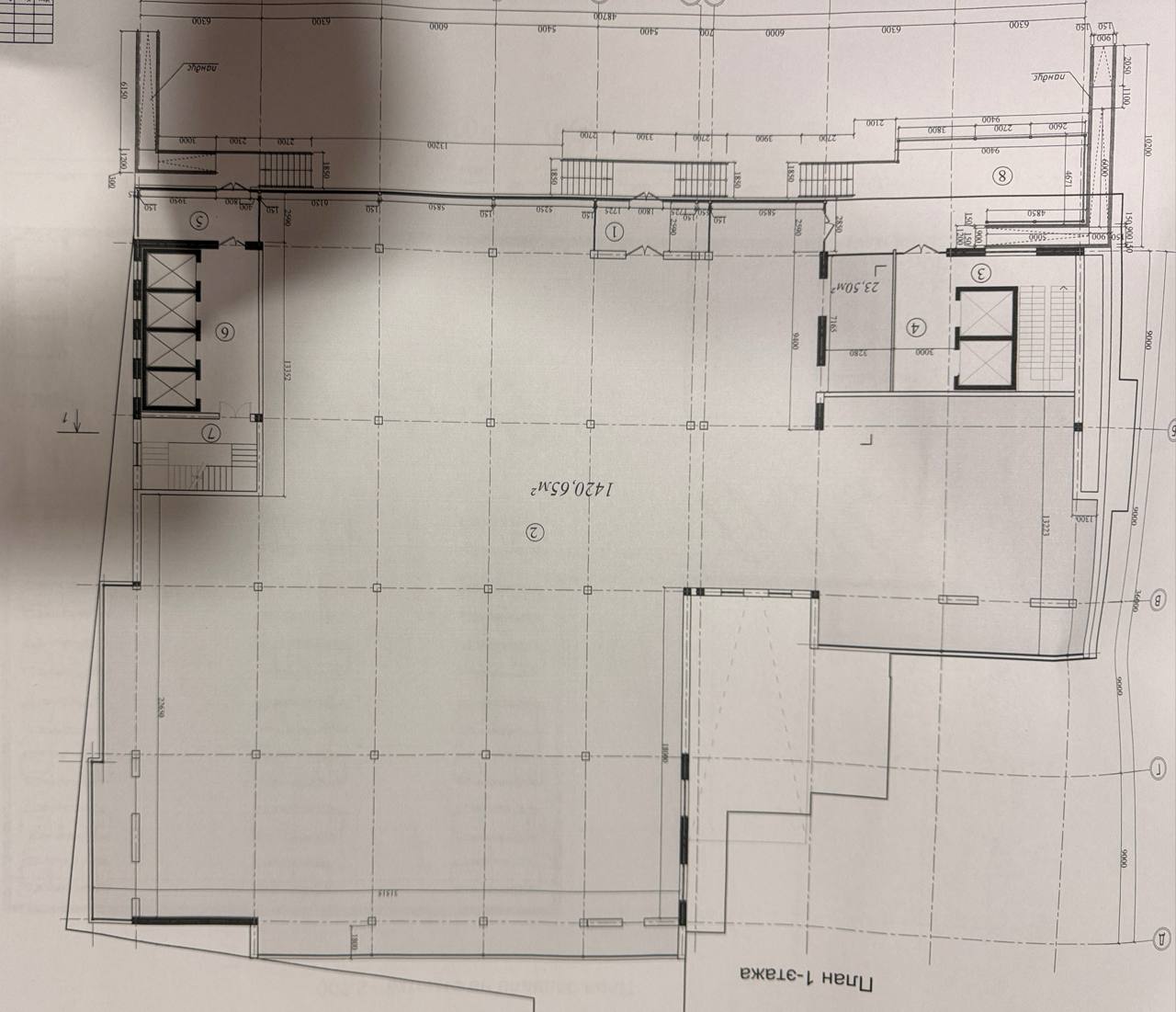
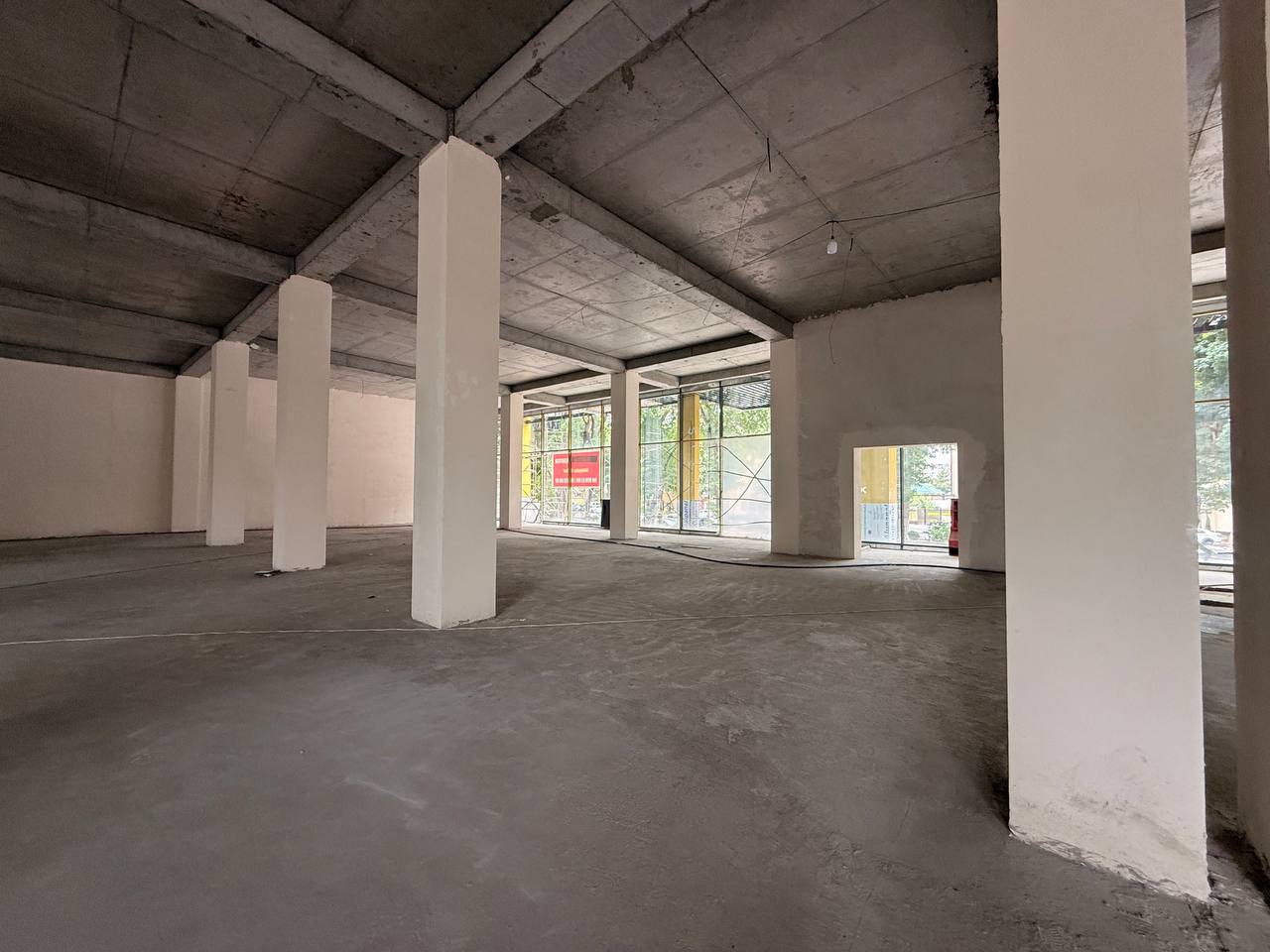
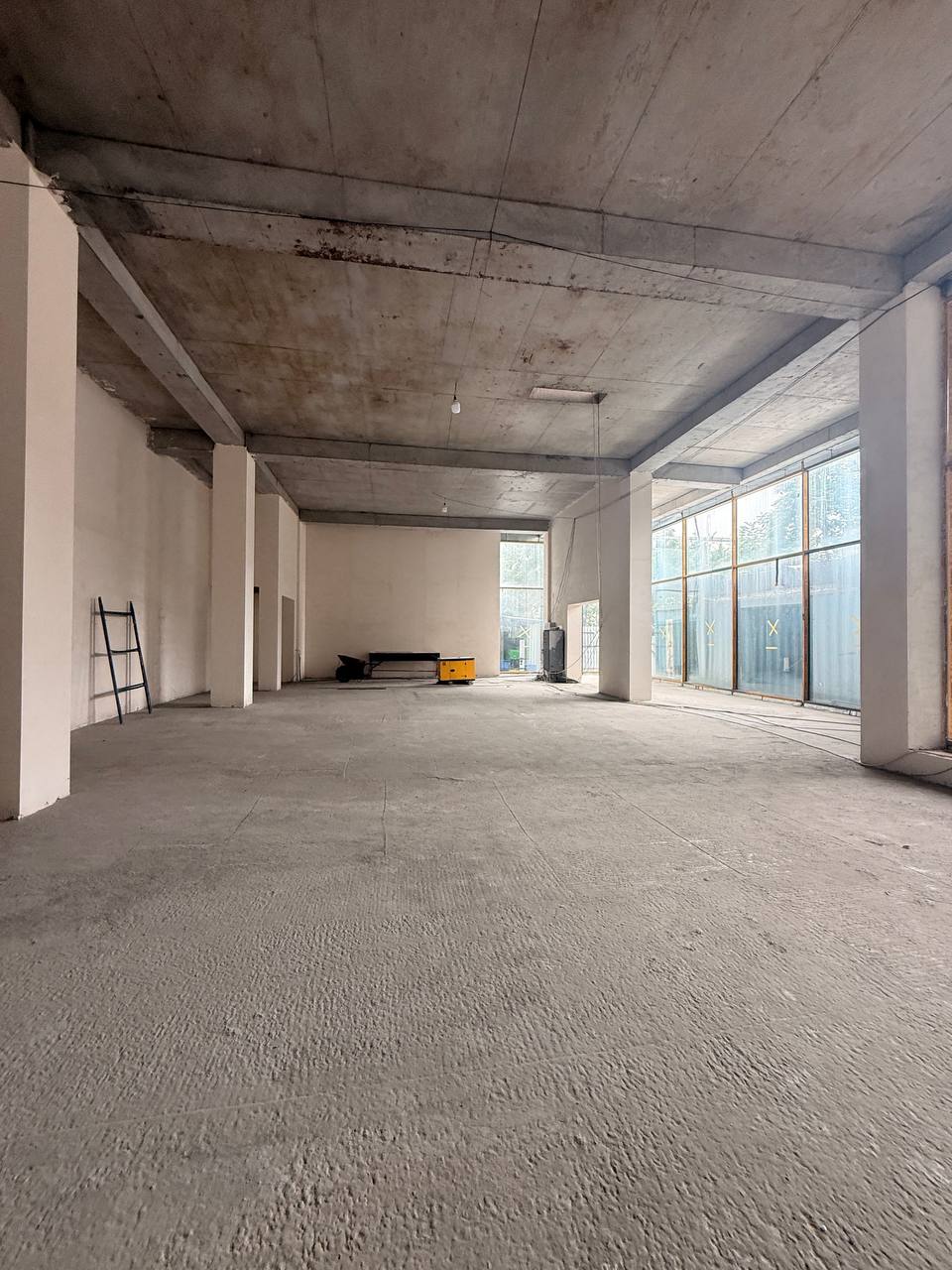
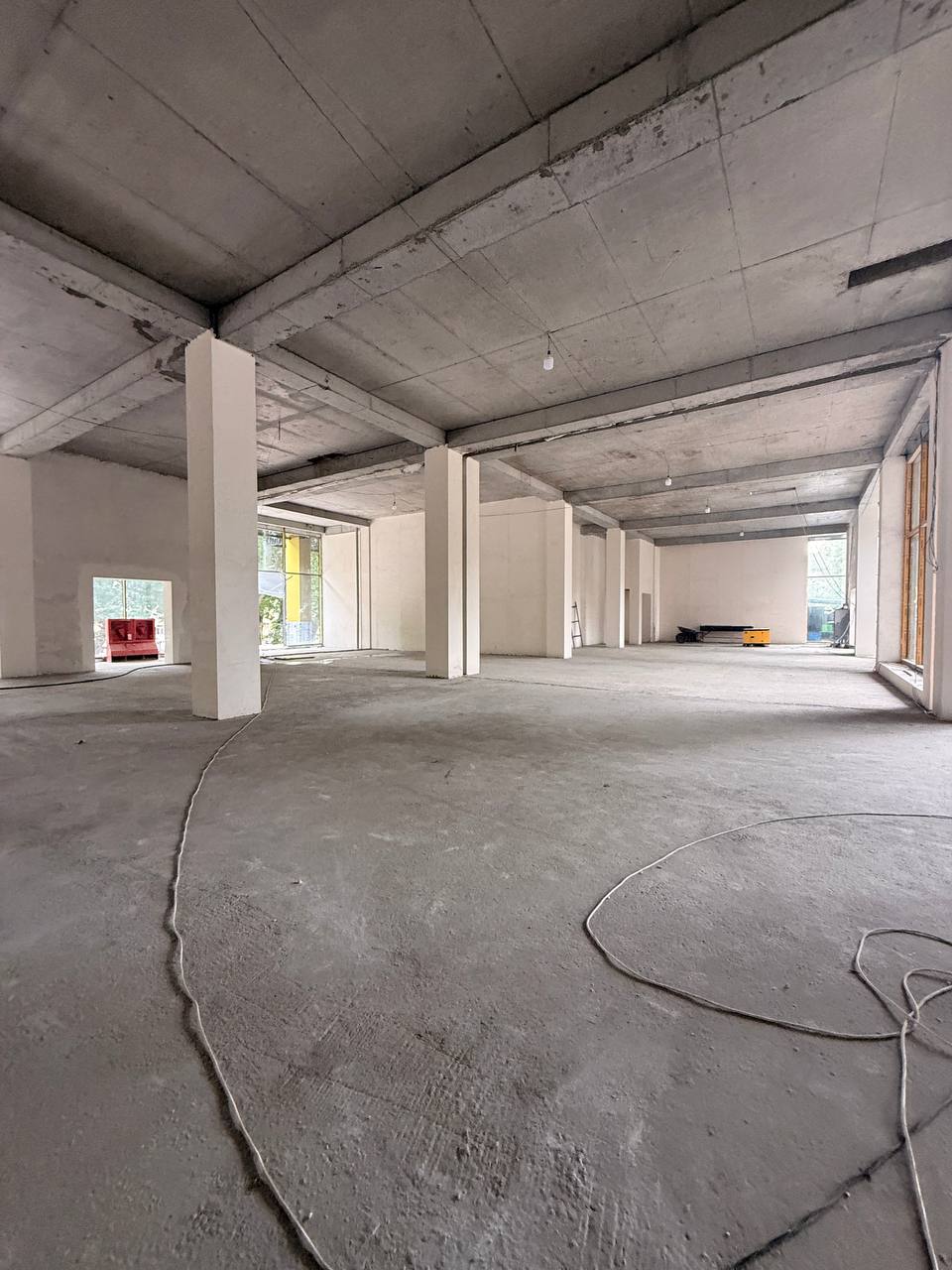
A listing may describe a site as 40 sotix, 0.4 hectares or 4,000 m². All three figures represent the same area, yet each creates a different sense of scale. For a business, the most damaging mistake usually occurs after the conversion: the entire site is mentally assigned to the building, while access, vehicle turning, loading, parking and technical areas are forgotten.
The useful question is therefore not “Is 40 sotix a lot?” but “Can the complete operating plan fit within 4,000 m²?” Answering it requires three steps: normalise the figures in square metres, reconcile them with official records and divide the site into functions.
Why equal area does not mean equal value
Area measures the quantity of land, not its shape. Rectangles measuring 20 × 200 metres and 50 × 80 metres both contain 4,000 m². The first may be too narrow for the intended building, separated traffic flows or efficient loading. The second offers more layout options, but that advantage may disappear if access is on the wrong side or restrictions affect part of the land.
Before comparing prices, obtain at least:
- a boundary plan showing side lengths and turning points;
- the position of existing and potential access points;
- information about the registered right, designated purpose, restrictions and easements;
- the location of utilities and the conditions for connection;
- a preliminary layout of the building, circulation routes and open areas.
A map is useful for understanding the surroundings and travel routes, so listings can first be reviewed on the Tashkent property map. An on-screen outline, however, does not replace cadastral records, an on-site survey or a design review.
How to convert sotix, hectares and square metres
The International Bureau of Weights and Measures defines one hectare as 10,000 m². One sotix is the commonly used local term for an are, which equals 100 m². Therefore:
- **1 ha = 100 sotix = 10,000 m²**;
- **1 sotix = 0.01 ha = 100 m²**.
The working formulas are:
- sotix ÷ 100 = hectares;
- hectares × 100 = sotix;
- sotix × 100 = square metres;
- square metres ÷ 100 = sotix;
- hectares × 10,000 = square metres;
- square metres ÷ 10,000 = hectares.
| Sotix | Hectares | Square metres | |---:|---:|---:| | 6 | 0.06 | 600 | | 10 | 0.10 | 1,000 | | 25 | 0.25 | 2,500 | | 40 | 0.40 | 4,000 | | 75 | 0.75 | 7,500 | | 100 | 1.00 | 10,000 | | 250 | 2.50 | 25,000 |
Square metres should be the main working unit for a project. They allow the building footprint, roads, parking and other functional zones to be added directly. Sotix remain convenient for reading smaller local listings, while hectares give a quick sense of scale for larger land holdings.
Do not round the source figure to whole sotix. A site of 3,968 m² equals 39.68 sotix or 0.3968 ha. “About 40 sotix” is acceptable in conversation, but not in a purchase, lease or design calculation.
Article 23 of Uzbekistan’s Law on State Registration of Rights to Immovable Property lists the information held in the state register. For land, this includes the cadastral number, area, location, type of right, designated purpose, restrictions and easements. Area therefore cannot be assessed separately from the site’s legal status.
Ask the right holder for a current register extract and cadastral passport. Uzbekistan’s public services portal provides a free service for checking these documents against the state register. Reconcile:
- the cadastral number and location;
- the exact area without rounding;
- the type of right and the right holder;
- the designated purpose;
- registered restrictions and easements;
- the cadastral outline against fences and actual occupation on the ground.
If the listing says 42 sotix but the register says 4,000 m², the additional 200 m² must not be treated as available land. A fence, a seller’s verbal explanation or years of actual use do not replace registered information. The right holder should explain the discrepancy and, where necessary, resolve it through the applicable procedure before the transaction.
An extract confirms registered characteristics, but it does not by itself prove that a particular building can be developed. That question requires planning and technical inputs, a site survey and qualified design work. If official documents do not provide a needed parameter—such as the permitted development envelope or access conditions—obtain it from the competent authority and project specialists rather than copying an assumption from a neighbouring development.
How to turn an operating scenario into a land calculation
Begin with the sequence of operations, not the proposed building area. Who will arrive, and in what vehicle? Where will visitors enter, trucks wait, goods be unloaded, waste be held temporarily and employees park? The answers form a spatial programme.
| Scenario | What to calculate in addition to the building | |---|---| | Shop or showroom | visible entrance, customer approach, parking and loading separated from visitors | | Warehouse | truck access, turning, doors, waiting and outdoor storage areas | | Small production facility | inbound and outbound flows, technical yards, utility equipment and waste handling | | Office or service facility | safe entrance, staff and customer parking, access for maintenance services |
Record the area and source for every item. A source may be a survey, an equipment supplier’s specification, a logistics plan, an architect’s preliminary layout or an official condition. “It looks sufficient” is not a source.
Use this formula:
**site reserve = cadastral area − total non-overlapping functional zones.**
“Non-overlapping” matters. If a fire access route can also serve maintenance traffic under the approved design, it should not be counted twice. Where functions cannot be combined, their areas must remain separate.
A project ratio is also useful:
**occupied-site share = area of all planned zones ÷ cadastral area × 100%.**
This is an internal indicator of layout density, not a statutory development ratio. Compliance with mandatory requirements must be checked separately.
Example: 40 sotix for a warehouse and showroom
Assume that a company is considering a 40-sotix site. Convert it into the working unit:
**40 × 100 = 4,000 m² = 0.4 ha.**
After a preliminary layout, the project team arrives at the following figures:
| Function | Project area | |---|---:| | Warehouse and showroom footprint | 1,600 m² | | Loading and vehicle manoeuvring | 900 m² | | Entrance, internal road and parking | 650 m² | | Utility and technical zones | 300 m² | | Landscaping and layout reserve | 250 m² | | **Total** | **3,700 m²** |
This leaves 300 m², or 7.5% of the cadastral area. Every figure in the table is a hypothetical input for this particular concept, not a rule for sites in Tashkent.
The result does not yet mean that the land is suitable. The reserve may disappear when boundaries, topography, connection conditions or mandatory design requirements are clarified. The calculation has nevertheless exposed the weakness before the transaction: the programme already occupies the site quite tightly. The team must verify geometry and restrictions or reduce the brief.
If 40 sotix were mistakenly read as 0.40 sotix, the scale would shrink one hundred times. Treating 40 sotix as four hectares would enlarge it tenfold. The control chain “40 sotix → 4,000 m² → 0.4 ha” catches both errors immediately.
How to compare several sites
Listings in the commercial property catalogue should be transferred into one comparison sheet. A price per sotix or hectare means little without this normalisation.
Add five lines for each option:
- cadastral area in m²;
- area occupied by the same operating scenario;
- remaining reserve;
- principal constraint created by the site’s shape;
- the document or calculation supporting each figure.
Do not compare “40 versus 50 sotix”. Compare the outcome of placing the same programme on each site. A 50-sotix plot may underperform a 40-sotix alternative because of a narrow entrance, awkward geometry or land that cannot serve the required function. The reverse is also possible: extra space creates value when it separates customer and freight traffic or preserves room for expansion.
Run two stress tests. First, increase the required outdoor area by 10%—an analytical scenario, not a regulatory requirement. Second, remove the most uncertain part of the site from the calculation. If the operation fails after either change, the reserve is too small and the decision depends on unverified assumptions.
When evaluating lease alternatives, compare land with completed commercial properties in Tashkent. A site may provide layout freedom, but it also transfers design, connection and launch risks to the business.
Checklist before making a decision
Before paying a deposit, signing a lease or purchasing, confirm that:
- the area has been converted into m², sotix and hectares without rounding;
- the listing figure matches current register information;
- the right holder, type of right, purpose, restrictions and easements are understood;
- the cadastral outline has been compared with physical boundaries;
- side lengths and the width and position of access are known;
- the operating scenario has been divided into non-overlapping zones;
- zone areas are supported by surveys, calculations or official conditions;
- a reserve has been retained for design refinement;
- uncertain parameters are addressed in transaction conditions or verified before payment.
The central conclusion is straightforward: unit conversion answers only the question of scale. A commercial land decision requires a second conversion—from area into a functioning business layout. If that layout does not fit or depends on unverified assumptions, extra sotix in a listing do not make the site suitable.
Sources and verification date