MERCATOR.UZ expert guide
Leasing a Secured Office in Tashkent: Where the Business Centre’s Protection Ends
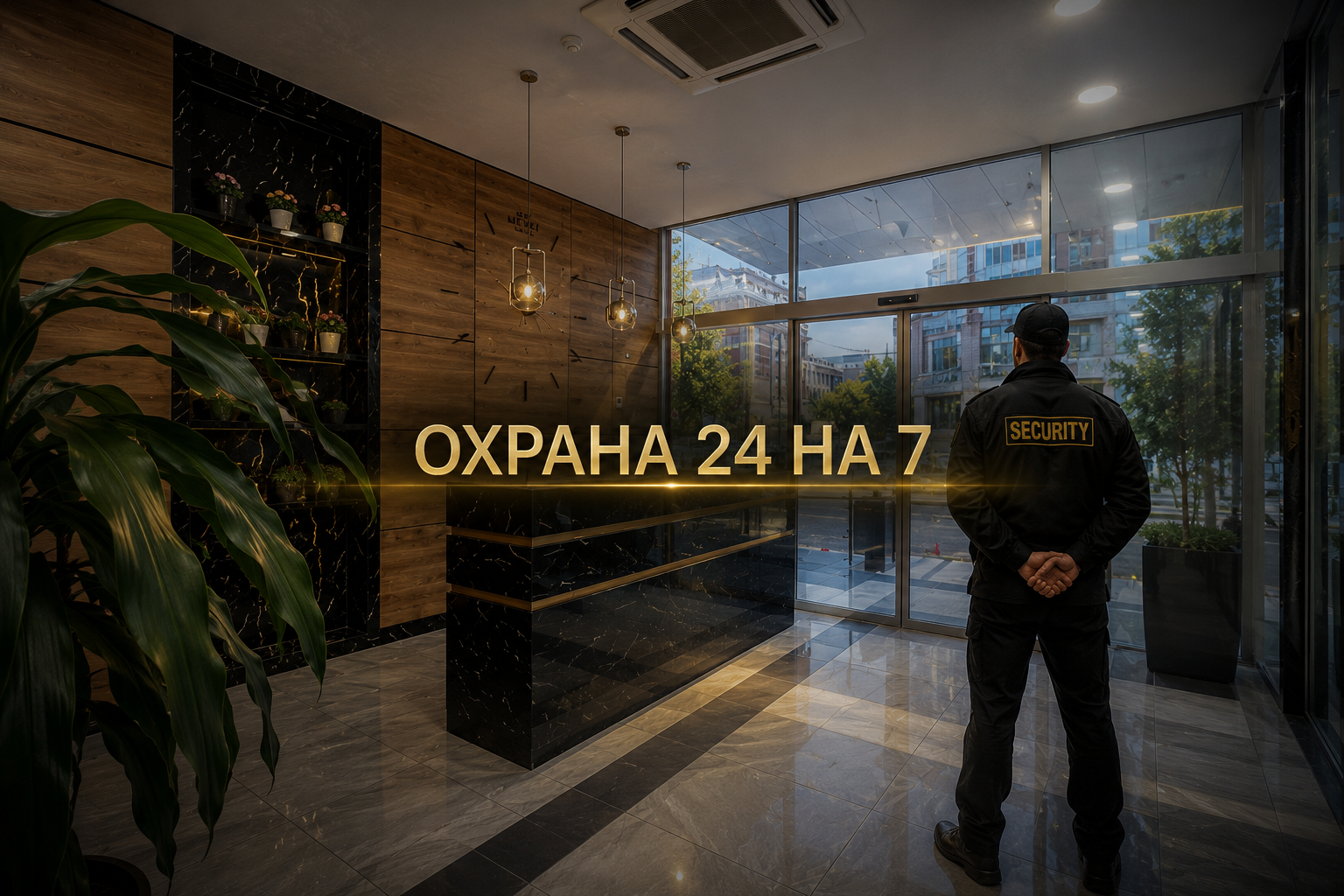
An office can have round-the-clock security and still become unprotected immediately beyond the tenant’s door. Staff pass through a turnstile, cameras record the lobby and a guard sits at reception, yet nobody may monitor forced entry into the office, accept responsibility for property inside it or be able to retrieve the relevant footage quickly.
Current Tashkent office listings and business-centre pages regularly place 24/7 security, CCTV, access control and reception in the same feature list. Examples include Soffice and Vega Business Centre. This confirms the language used in the market, not the scope or performance of the service. Before selecting a property from the Tashkent offices for rent section, establish exactly where the business centre’s responsibility ends.
24/7 security does not mean your property is protected
Security can describe at least four different services: a guard at the entrance, monitoring of common areas, administration of access credentials and a response to an alarm. None automatically means that computers, documents or equipment inside the leased office are protected.
Start with an incident, not the camera count. The office door opens at night: who sees the event, who receives an alert, what is the duty officer authorised to do and who contacts the tenant? If the answer stops at the fact that a camera is recording, the service provides an archive rather than an active response.
Uzbekistan’s Civil Code connects the condition of leased property with the contract and its intended use. It does not allow a tenant to infer the division of duties between the owner, building management, security provider and tenant from an advertising label. That division should be recorded for the specific office.
Map the responsibility boundary
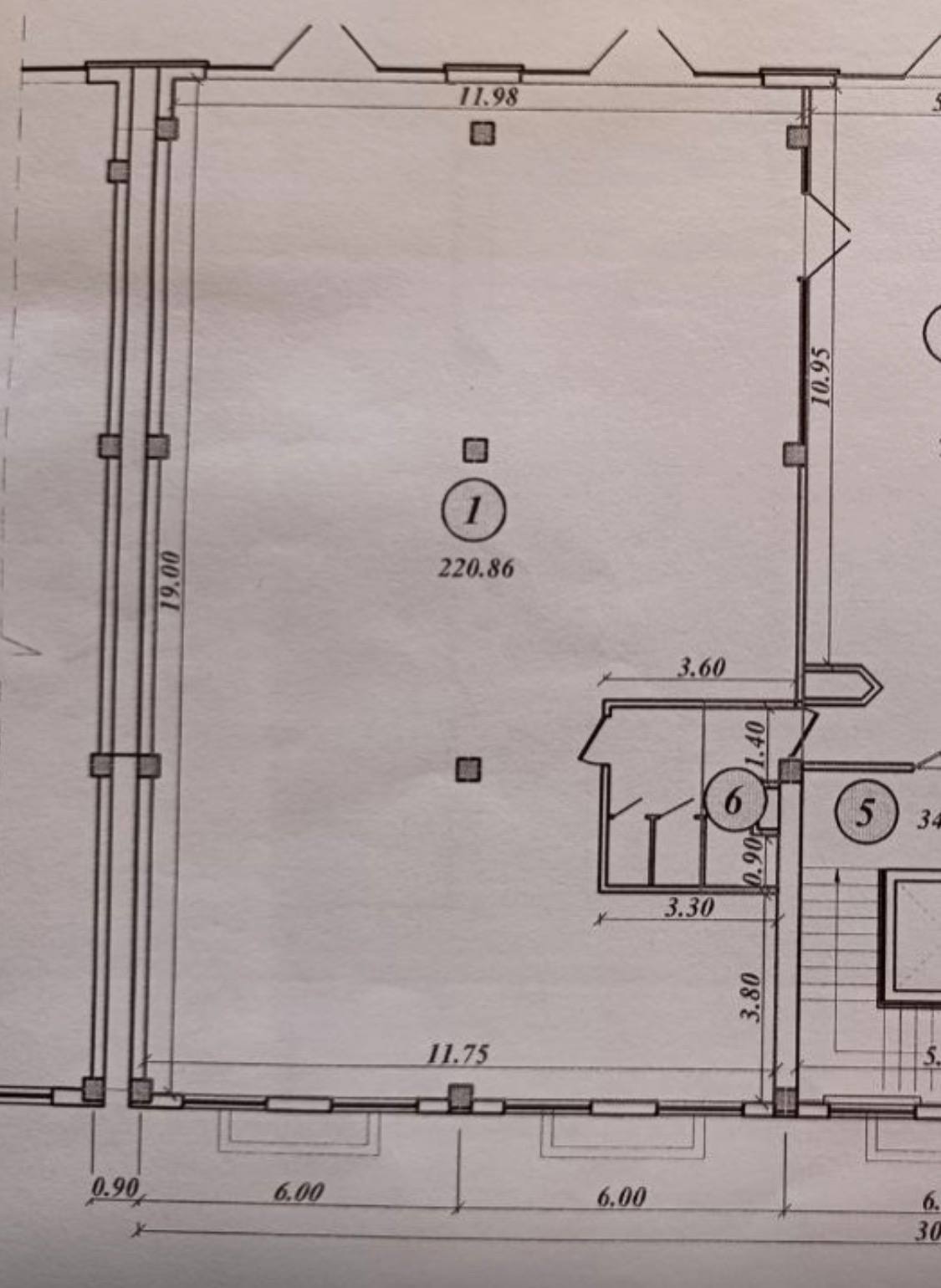
Take a floor plan and mark five boundaries: entry to the site, the building entrance, the turnstile, access to the required floor and the office door. Add cameras, security desks, readers, intercoms and any points where a visitor could proceed without verification.
Ask the same questions at every boundary:
- who controls access and who covers that role after normal working hours;
- which events are logged, including entry, denial, forced opening and a door left open;
- who receives the notification and through which channel;
- whether surveillance covers the approach to the office or only the lift lobby;
- where the tenant’s own responsibility begins;
- how cleaners, engineers, couriers and staff from neighbouring offices enter.
There is no need to demand disclosure of the full security layout. Walk the agreed route with a building representative and record which points fall within the service. Use the property map to compare locations first, then perform this inspection on a shortlist.
Test four systems as one chain
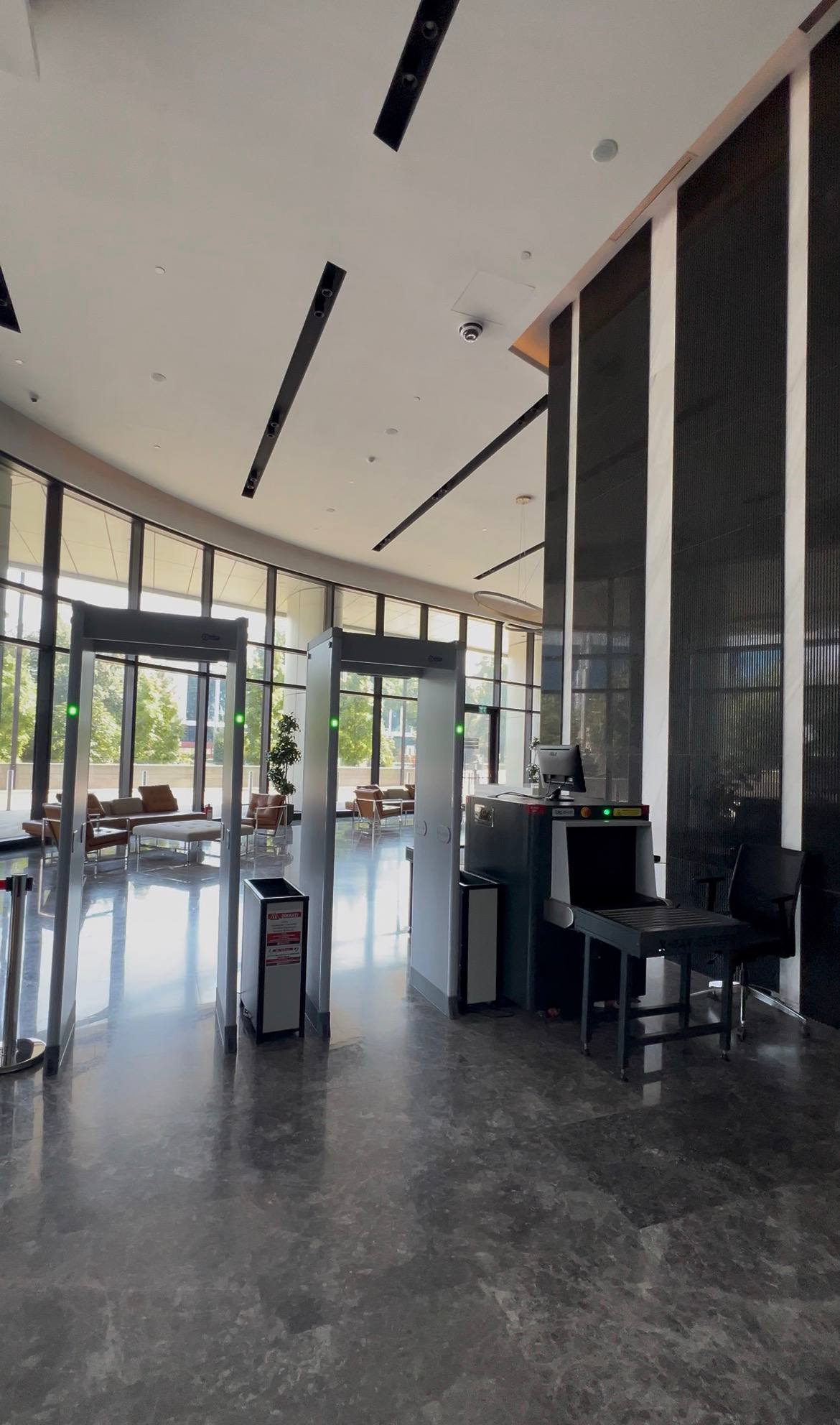
Security does not operate separately from building systems. An electronic lock depends on a controller; the controller may depend on power and network connectivity; an alert depends on software and a duty officer; access to the floor may also depend on the lift.
| System | What to test on site | What to establish for an outage |
|---|---|---|
| Access-control system | issue, amendment and revocation of a card; time and zone permissions; event log | whether local access works without the server and who applies the fallback procedure |
| CCTV | view of the office entrance and common routes, plus image quality under actual lighting | who can retrieve footage and how the relevant segment is preserved and released |
| Door sensors and alarm events | whether forced or prolonged opening is detected and who receives the alert | who verifies the event and who may attend the office door |
| Communications and duty service | a working telephone, intercom or other channel and an on-duty person during required hours | which channel remains available during a network or power failure |
Ask the technical team to identify which elements have backup power. Do not assume that the resilience designed for fire-safety equipment extends to the entire access-control system. The autonomy of turnstiles, readers, servers, lifts and cameras depends on the particular building design.
Run three safe scenarios
The first scenario is a routine change of permissions. Ask management to activate a test credential, restrict it to one floor and then revoke it. Test the car park, turnstile, lift, floor and office door. A revoked credential should not continue to open a forgotten part of the route.
The second scenario is a visitor arriving after reception has closed. Register the visitor in advance and follow the full route at the time the business genuinely needs access. Establish who approves and escorts the guest and who can let the person leave if the host does not answer.
The third scenario is a failure of power, network connectivity or facial recognition. The building’s technical team should run this test under an agreed programme. The tenant observes whether an authorised employee can enter, everyone can leave safely, security remains reachable and the event log survives recovery. Tenants should never disconnect equipment, simulate a fire or trigger an alarm themselves.
The fire scenario must be checked against the design and operating documents with the responsible specialists. It is incorrect to demand that every door simply unlock during an alarm. Fire doors may need to close to restrict smoke and flames while retaining the designed means of escape. The test is safe egress under the approved scenario, not a universal lock position.
Check facial-recognition access separately
Market pages sometimes use Face ID as a generic label, but facial-recognition access or biometric identification is more precise unless a specific product is meant. If a facial image or template is used to identify a person, Uzbekistan’s Law on Personal Data treats it as biometric data. Subject consent is generally required unless a statutory exception applies. The current law also requires biometric data to be stored in Uzbekistan.
Before accepting the system, ask:
- who owns and operates the database;
- whether it retains an image, a biometric template or both;
- the purpose of processing and who can access the data;
- the retention period and deletion procedure when an employee leaves;
- whether data is disclosed to an integrator or cloud provider;
- whether a card or duty-officer procedure is available as an alternative.
An alternative is not only for someone who does not wish to use biometrics. It keeps the office operational after a recognition error, injury, change in appearance or equipment failure. The company should have its specialist review the specific legal arrangement because the tenant, owner and building management may perform different data-processing roles.
Find out how evidence is retained and incidents are handled
The statement that footage is archived has little value without a retention period and retrieval procedure. A business may discover a loss late, then need time for an internal review and a formal request. Set the required availability period using this method:
delay in discovering the event + internal approval time + the business centre’s request-processing time.
Compare the result with the system’s actual retention period. Do not select an arbitrary number of days: the period should follow from the business scenario and the system’s verified capability.
Ask what happens after a request is filed. Who accepts it? How are the camera and time interval identified? Who prevents automatic deletion? In what format is the material released, and how is the handover recorded? The Personal Data Law requires legal, organisational and technical protection measures, so uncontrolled delivery of footage to a general messaging group should not be treated as a proper process.
A workable response chain is event — notification — verification — action — recorded outcome. If one link has no owner, the camera or sensor does not close the risk.
Put the protection boundary into the lease
The lease schedule should describe services and responsibility boundaries, not just equipment brands.
| Subject | What to record |
|---|---|
| Protected area | common areas, approach to the office, office door or internal premises |
| Operating hours | security desk, monitoring, credential administration and request-handling hours |
| Response | alert recipient, authorised action and notification of the tenant |
| Access | staff, visitors, contractors, car park, lifts and out-of-hours arrangements |
| Archive | categories of records, agreed availability period and request procedure |
| Biometrics | parties’ roles, purpose, consent, storage, deletion and alternative access method |
| System failure | fallback procedure, communication channel, responsible party and recovery of logs |
Do not invent a response time. Ask building management to confirm its actual duty arrangements, then compare them with the interruption the business can tolerate. An undeliverable promise in a schedule is worse than a clearly disclosed limitation.
Tie the schedule to the exact unit and floor plan. Before signing, match the premises and the counterparty’s authority to the documents. Uzbekistan’s my.gov.uz service can verify an extract and cadastral passport from the property register. The Civil Code provides the general duties of the parties, but the consequences of a specific failure, notification process and allocation of operating functions should be stated directly in the contract.
A final filter before choosing the office
An office has not passed the check if building management cannot show the security boundary, name the recipient of an alarm event or explain how a credential is revoked. Mandatory biometric access without a clear notice and workable alternative is another serious warning.
Physical accessibility must also be tested as an entire route: a wide gate beside the turnstile, reader, lift, door and communication with security. Uzbekistan’s Law on the Rights of Persons with Disabilities establishes access to buildings and services. A ramp alone does not prove that an employee or visitor can reach the office independently.
When comparing two or three properties from the Tashkent commercial property rental section, use one final question: what exactly happens after the system detects an event? The stronger option identifies the monitored area, technical dependencies, responsible person, fallback procedure and documented outcome.
Sources and verification date
- Гражданский кодекс Республики Узбекистан, часть вторая — verified 2026-10-09
- Закон Республики Узбекистан «О персональных данных» — verified 2026-10-09
- Закон Республики Узбекистан «О правах лиц с инвалидностью» — verified 2026-10-09
- Правила и технические регламенты в области пожарной безопасности и чрезвычайных ситуаций — verified 2026-10-09
- Проверка выписки и кадастрового паспорта объекта недвижимости — verified 2026-10-09
- Аренда офисов в бизнес-центрах Ташкента — verified 2026-10-09
- Аренда офисов в Ташкенте — verified 2026-10-09